o projekcie
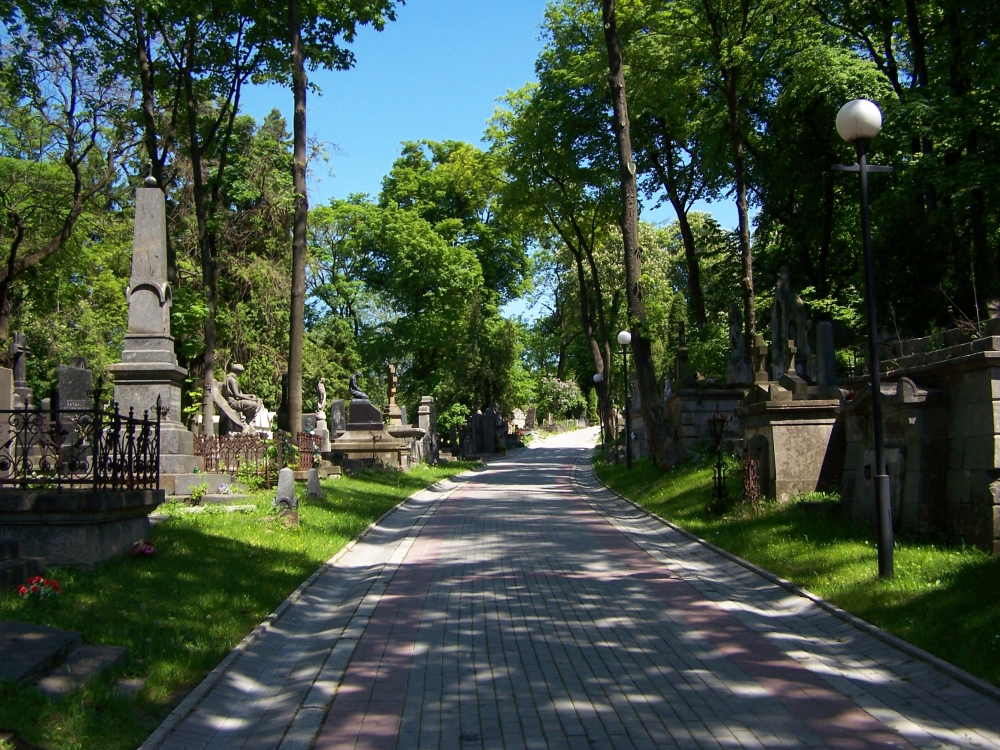
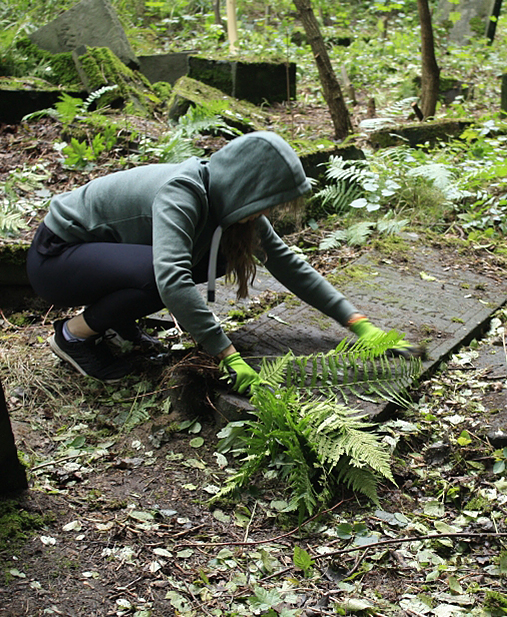
Since 2013, the Cultural Heritage Foundation and the Association of Academic Traditions have been jointly involved in a comprehensive inventorying of the grave markers representing different religions at the Lychakiv Cemetery in Lviv.
Inventorying and compiling a register of the memorials found at the site is only the first stage of a larger-scale project. Our activities are to result in an online database of all the existing grave markers present at the Lychakiv Cemetery.
It is in an international project, involving Polish-Ukrainian teams working together to achieve a common goal. The works carried out as part of the project are corrdinated by Anna Lewkowska, Jacek Lewkowski, and Wojciech Walczak (representing Poland), and by Tatiana Kłymieniuk, PhD (representing Ukraine).
W roku 2019 zostaną stworzone karty inwentaryzacyjne nagrobków na cmentarzu Łyczakowskim na terenie kwater nr 71, 72, 77 na podstawie międzynarodowych terenowych badań inwentaryzacyjnych oraz stworzone zostaną w bazie KMEM pojedyncze rekordy obiektów.
Zadanie realizowane było ze środków Ministra Kultury i Dziedzictwa Narodowego pochodzących z Funduszu Promocji Kultury przyznanym Towarzystwu Tradycji Akademickiej (partnerowi Fundacji).
In 2018, our international team focused on graves found in quarters no. 67, 68, 69, 70, 78. All of the inventoried grave markers had individual record sheets developed and uploaded to the KMEM online database.
The task was financed from the resources of the Minister of Culture and National Heritage’s Culture Promotion Fund granted to the Association of Academic Traditions (the Foundation’s partner).
In 2017, the teams engaged in the project managed to supplement the existing data with information concerning graves found in quarters 43-49.
The task was carried out with the support of the Ministry of Culture and National Heritage’s funds granted to the Association of Academic Traditions (the Foundation’s partner) as part of the programme entitled “Protection of Cultural Heritage Abroad”.
In 2016, the Cultural Heritage Foundation and the Association of Academic Traditions managed to fully inventory 641 graves found in quarters 26-28 and 30-42. By collecting data concerning graves found in quarters 5-8, we finished the process of the said accelerated inventorying of graves from before 1945. The three-year process of inventorying resulted in a database including a total of about 6,000 Polish graves.
The works we carried out were financed from the Minister of Culture and National Heritage’s funds granted to the Association of Academic Traditions (the Foundation’s partner) as part of the “Cultural Heritage” programme, priority: “Protection of Cultural Heritage Abroad”.
The project continued in collaboration with the Institute of Architecture of the Lviv Polytechnic National University, which let us inventory further memorials in 2015. The full inventory included quarters no. 22-25, and shortened inventorying covered quarters no.:
36, 37, 38, 39, 40, 41, 43, 44, 45, 46, 65, 66, 82, 83, 85.
As the inventorying works progressed, the online cemetery database was being developed at the same time. We had special software named Kmem developed for the needs of the project, which we used to collect information concerning particular memorials. The software makes it possible to browse through and search for monuments according to selected criteria. There’s also an option to generate a PDF file with a monument record sheet and print it.
The project was financed from the Ministry of Culture and National Heritage’s funds granted as part of the “Cultural Heritage” programme, priority: “Protection of Cultural Heritage Abroad”.
Working with the Council for the Protection of Struggle and Martyrdom Sites, our Foundation managed to conserve two additional grave markers. These were the tombstones of Tadeusz Kościuszko’s soldiers: Antoni Piórecki and Franciszek Zaremba.
The full inventory covers several to over a dozen quarters each year. We draw up a monument record sheet for each of the existing grave markers – with around 1,000 such sheets being drawn up each year. At the same time, given the ongoing degradation of historic monuments, this year marks the start of an accelerated inventorying of Polish grave markers dating back to before 1945. In 2014, the register covers approximately ¼ of the surface area of the cemetery.
In 2014, the project proceeded thanks to the Minister of Culture and National Heritage’s funds granted to the Association of Academic Traditions (the Foundation’s partner) as part of the “Cultural Heritage” programme, priority: “Protection of Cultural Heritage Abroad”.